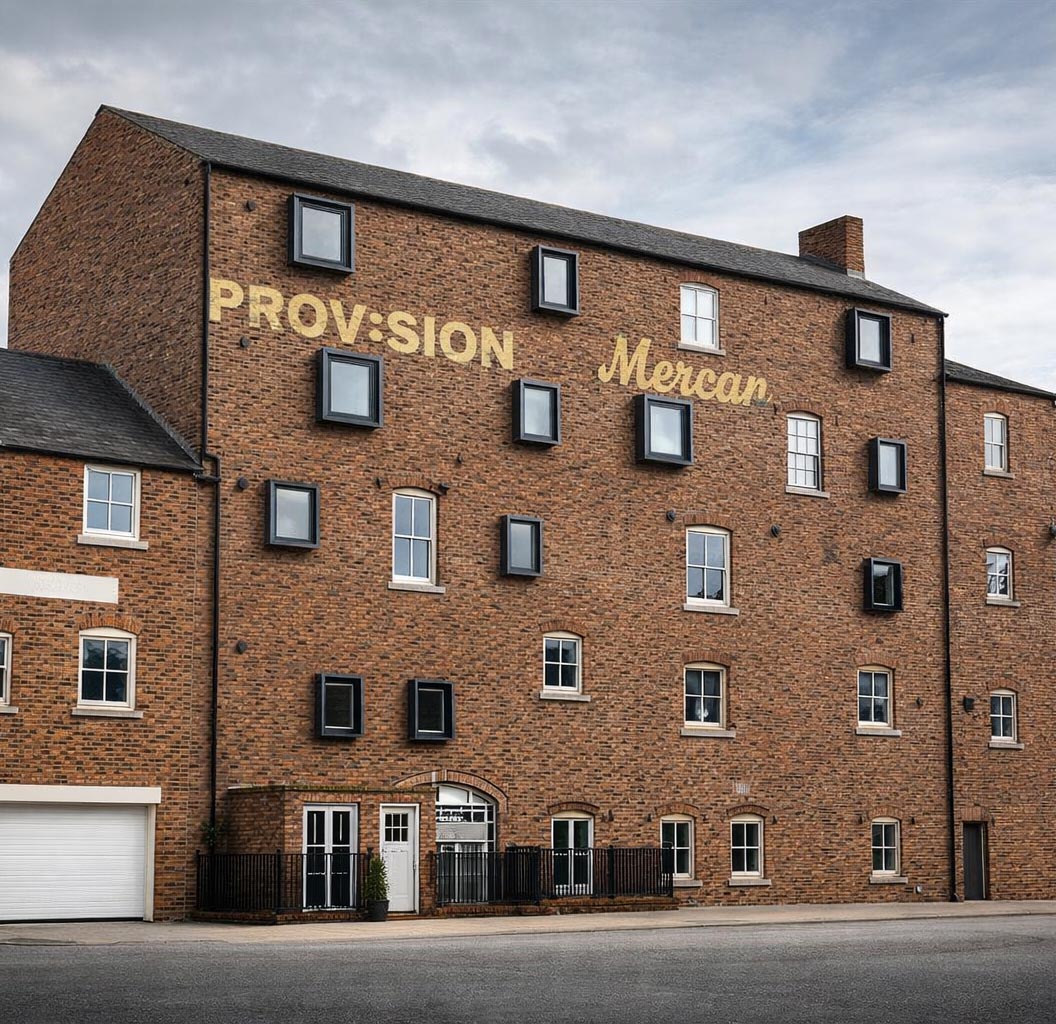
A Grade II Listed Former Wool Staplers' Warehouse
Location:Wakefield
Client: Fox Lloyd Jones
Type: Mixed Use
Value:Undisclosed
Status:Planning Approved
Stages:0-3
The proposals at 19 Cheapside, Wakefield seek to secure the long-term reuse and preservation of a prominent Grade II Listed former wool-staplers’ warehouse within the Upper Westgate Conservation Area. The scheme delivers a sensitive part change of use from office accommodation to residential, providing twelve high-quality one-bedroom apartments alongside a retained self-contained office suite at lower ground floor level. The approach responds to the building’s historic significance while ensuring its ongoing viability within a changing city-centre context.
Located on the western edge of Wakefield city centre, the building sits within an area historically characterised by red brick warehouses associated with the wool trade. With excellent access to public transport, employment, and amenities, the site is well suited to residential use, aligning with both national and local planning policy that supports city-centre living. The proposals contribute positively to the continued regeneration of Cheapside, reinforcing its transition toward a mixed-use residential quarter.
Externally, the principal Cheapside elevation is retained and restored, with the removal of modern signage and the implementation of previously approved heritage repairs including lime mortar repointing, timber sash window refurbishment, and conservation roof works. The secondary Carter Street elevation, which has evolved significantly over time, accommodates a limited number of carefully proportioned new openings with a modern contrasting style and protruding aluminimum frames.
Internally, the scheme adopts a “warehouse living” approach, retaining and celebrating key historic features such as exposed brickwork, floor joists, roof trusses, original hoists, and a historic safe. Modern interventions are limited to non-historic fabric and are carefully designed to improve energy performance, fire safety, accessibility, and acoustic comfort without harming the building’s significance. The result is a sustainable, car-free residential conversion that delivers much-needed housing while safeguarding an important heritage asset for future generations.
Want to Work with Us?
Contact